Shark Cage Diving Near Cape Town Locations Explained
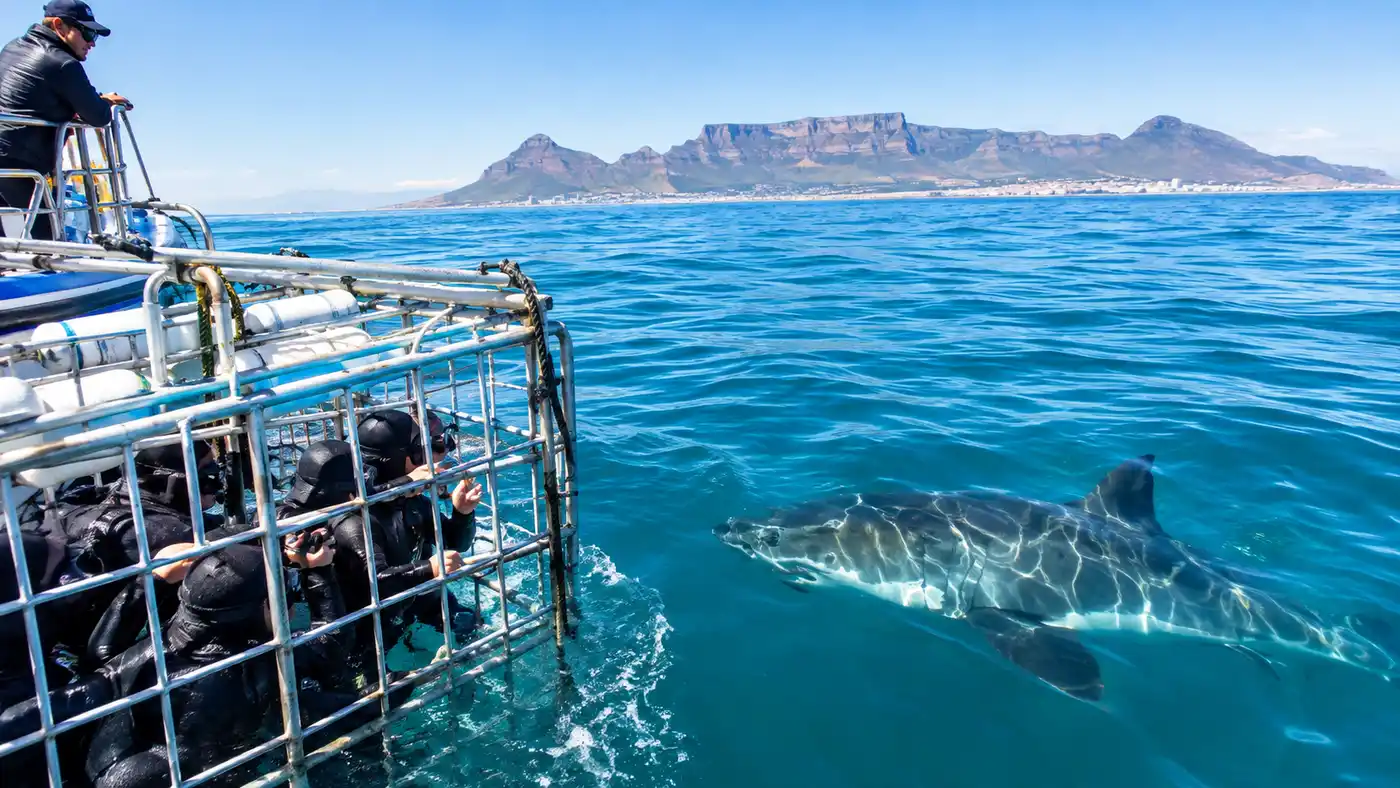
Most travelers arrive in the Mother City imagining great whites swimming right along the Atlantic Seaboard promenade, expecting to step onto a boat near the V&A Waterfront. When people search for a shark zone cape town central departure, they are usually surprised to learn that no commercial cage dive operators run boats directly out of Table Bay harbor. The geography of the Western Cape simply does not work that way. The predators congregate where their food lives, and that means you have to travel a little outside the city bowl to find them.
Cape Town sits between two vastly different marine environments, with cold Atlantic currents washing up on the west and slightly warmer waters circulating through False Bay to the east. Deciding where to go depends on how much driving you can handle, which time of year you arrive, and what kind of underwater encounter you actually want to experience. Here is the realistic breakdown of every major launch site, how to reach them, and what is swimming beneath the surface.
Understanding the Hubs: Why There Is No Shark Zone Cape Town Central Launch Point
You cannot simply wake up, stroll past the Victoria & Alfred shops, and step into an offshore shark cage. Commercial cage diving requires very specific coastal permits issued by the Department of Forestry, Fisheries and the Environment. These permits are strictly tied to specific conservation bays where seal colonies support resident predator populations. Table Bay has plenty of marine traffic, cargo ships, and choppy open swell, but it lacks the dense offshore seal haul-outs that draw pelagic sharks close to shore.
If you book an excursion advertised within the city center, your tour company will simply send a transport shuttle to pick you up at your hotel early in the morning. That morning drive usually takes you down the coast to False Bay or two and a half hours east around the mountains toward the Overberg region. It caught me off guard my first trip out, mostly because I had not budgeted the extra travel time into my itinerary. Planning your day around a cage dive means committing anywhere from five to eleven hours door to door.
Cape Town itself serves as the logistics and accommodation anchor. You stay in the city, eat dinner on Kloof Street, sleep comfortably, and let the transfer minibuses shuttle you out before sunrise. Knowing which direction that van is heading will shape your entire day.
Book your shark cage diving cape town experience:
Simon's Town and False Bay: The Closest Shark Zone Cape Town Central Travelers Can Reach
Simon's Town is the easiest ocean outpost to reach from the middle of town. The drive down the M4 through Muizenberg, Kalk Bay, and Fish Hoek takes about 47 minutes outside peak traffic, skirting the coastline the whole way. Boats launch directly from the town pier, passing the historic naval base before cutting out into open water.
The main target out here is Seal Island, an exposed granite outcrop roughly five kilometers offshore that supports around 65,000 Cape fur seals. For decades, False Bay was world famous for flying great whites that breached out of the water while hunting seals at dawn. That specific natural circus shifted dramatically around 2017 when a pair of specialist orcas named Port and Starboard began hunting the local white sharks, targeting their nutrient-dense livers with surgical precision.
The great whites scattered. Nature adapted quickly, though, and the void was soon filled by broadnose sevengill cowsharks and massive schools of bronze whalers, locally called copper sharks. Bronze whalers can reach over three meters in length and are bold, inquisitive swimmers that will circle the cage repeatedly in large groups.
Note: Great whites do still visit False Bay intermittently, but reputable skippers will never promise them. Expect incredible action from bronze whalers and sevengills instead, which often stay around the boat longer than whites ever did.
If your schedule is packed, Simon's Town offers the best logistical compromise. You can dive in the morning, grab fish and chips along the harbor wall, visit the African penguins at Boulders Beach around 2:00 PM, and still make it back to your downtown hotel in time for sunset drinks.
Gansbaai and Shark Alley: The Traditional Capital of Cage Diving
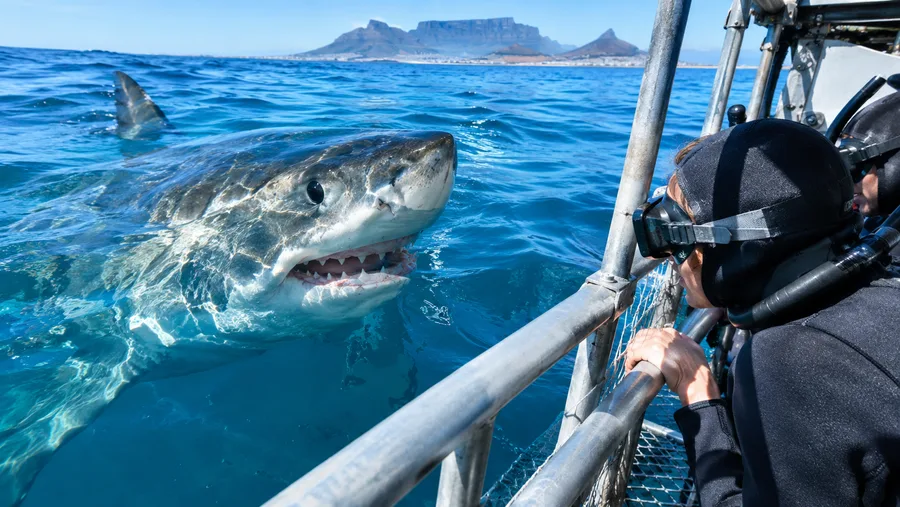
About 163 kilometers east of Cape Town lies Gansbaai, a sleepy fishing village built around Kleinbaai harbor. This is ground zero for South African shark tourism. The boats head five nautical miles offshore to anchor in the shallow channel between Dyer Island and Geyser Rock, a stretch of ocean universally known as Shark Alley.
Dyer Island is home to thousands of African penguins and cormorants, while Geyser Rock holds roughly 60,000 Cape fur seals. The channel between them provides an endless buffet. The drive from the city follows the N2 highway through Sir Lowry's Pass before dropping down into the Hemel-en-Aarde valley and past Hermanus. If you want a deep dive into the operational setup there, our Gansbaai shark cage diving guide breaks down the history and daily flow of Kleinbaai skippers.
Gansbaai runs year-round operations because the bay offers natural shelter from heavy southwesterly winds that often shut down False Bay. The water is cold, hovering between 12 and 15 degrees Celsius, but the operator suits are thick 7mm neoprene pieces that keep the chill manageable. Visibility varies wildly. Some days you get eight meters of crystalline green water; other days you can barely see the end of the bait rope through the plankton bloom.
Pro tip: Take motion sickness pills at least 45 minutes before stepping onto the boat in Kleinbaai, because the rolling ocean swell in Shark Alley makes even experienced sailors nauseous while anchored.
The boat ride out to the channel takes only 15 minutes, but you spend roughly two to three hours tied up at the anchor line. When bronze whalers appear, they often come in packs of four or five, nudging the mesh cage and thrashing at the surface. It is fast, loud, salty, and completely mesmerizing.
- Travel distance: roughly 165 km from central city hotels, meaning a 2.5 to 3 hour drive each way.
- Typical sightings: bronze whaler sharks, occasional great whites, short-tail stingrays, and Cape fur seals.
- Operating window: boats run 365 days a year, weather and sea state permitting.
- Best for: travelers wanting the highest statistical probability of seeing big sharks in the water.
Book your shark cage diving cape town experience:
Comparing the Western Cape Shark Diving Locations
Choosing between False Bay, Gansbaai, and further coastal options comes down to travel tolerance and marine goals. Here is how the primary staging areas compare against one another.
| Launch Location | Distance from Town | Primary Shark Species | Typical Water Clarity | Average Boat Ride |
|---|---|---|---|---|
| Simon's Town (False Bay) | 45 km (under 1 hour) | Bronze Whalers, Sevengills | 3 to 7 meters | 25 minutes to island |
| Kleinbaai (Gansbaai) | 163 km (2.5 to 3 hours) | Bronze Whalers, Great Whites | 2 to 8 meters | 15 minutes to alley |
| Mossel Bay | 390 km (4.5 to 5 hours) | Great Whites, Ragged-tooth | 4 to 10 meters | 10 minutes to site |
Mossel Bay: The Garden Route Alternative
Mossel Bay sits far beyond what anyone would consider a day trip from central Cape Town, but it deserves a spot in this conversation. If you are already road-tripping along the Garden Route, driving east makes far more sense than doubling back to Gansbaai.
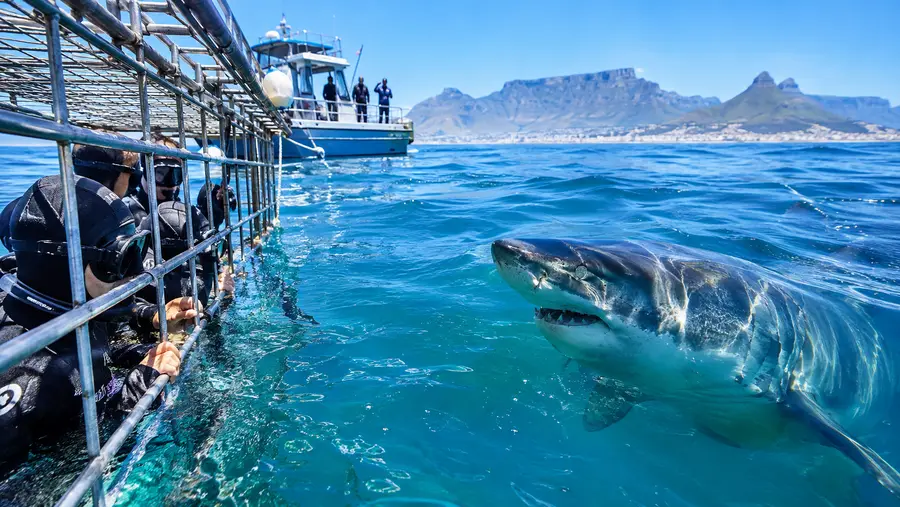
The boat ride from Mossel Bay harbor out to the dive site at Seal Island takes less than ten minutes. The bay is remarkably sheltered from large ocean swells by the Cape St. Blaize peninsula, making it far calmer for anyone prone to seasickness. Sightings of great white sharks have remained unusually consistent in Mossel Bay over recent seasons. The animals here tend to be younger juveniles and sub-adults measuring between two and three and a half meters, making them agile, erratic, and curious around the dive cage.
Water temperatures in Mossel Bay are slightly warmer than the Atlantic coast, often hitting 18 degrees Celsius during summer months. Visibility tends to be superior because the surrounding waters are protected from heavy open-ocean sediment run-off.
Hout Bay and Inshore Kelp Forests: The Snorkel Option
For visitors who do not necessarily need a steel cage to feel the thrill of the ocean, the Atlantic side near Hout Bay offers a completely different encounter. Leaving from Hout Bay harbor, you can join boat charters running out to Duiker Island to swim with thousands of Cape fur seals in shallow water. You do not stay inside a cage; you float right on the surface in thick hooded wetsuits while young seals dart past your mask like aquatic puppies.
Just past the headland lie the cold-water Great African Seaforest kelp beds. These sprawling bamboo kelp forests were made famous by documentary films, and they harbor harmless pyjama catsharks, puffadder shysharks, and leopard catsharks. These small benthic species rest on the sandy bottom and wind through the golden fronds. Timing your trip around the broader Cape Town shark diving season makes a noticeable difference, as summer brings clear Atlantic water while winter clears out the eastern bays.
It is quiet, hauntingly beautiful, and takes just 25 minutes to reach from central city hotels along the Atlantic coast. It offers a gentle counterpoint to the adrenaline-heavy chum slicks of Shark Alley.
- Layered clothing: ocean spray and morning harbor winds can feel freezing, even in the middle of January.
- Polarized sunglasses: cut surface glare on the water so you can spot shadows approaching long before they surface.
- Reef-safe sunscreen: sitting on the top deck during a three-hour boat drift will scorch your skin without you feeling the heat.
- Compact dry bag: deck space is soaked with sea spray, chum water, and washdown hoses.
Frequently Asked Questions about shark zone cape town central
Can I go cage diving directly from downtown Cape Town?
No boats run cage dives directly from Table Bay or the Waterfront docks. All authorized operators launch from Simon's Town, Gansbaai, or Mossel Bay, though nearly all companies provide direct early-morning hotel pickup services from downtown Cape Town.
How early do tour shuttles leave the city center?
For Gansbaai excursions, hotel pickups usually occur between 4:30 AM and 6:30 AM, depending on tides and sea conditions. Simon's Town trips leave slightly later, usually around 6:00 AM or 7:00 AM.
Do I need scuba diving certification to enter the cage?
No certification is required for surface cage diving. The cages float tied to the side of the vessel, and participants simply pull themselves underwater using interior handrails on a breath-hold, or breathe through basic surface-supply hookah regulators.
Quick Reference
- Closest launch: Simon's Town (45-minute drive)
- Highest activity: Gansbaai (2.5-hour drive)
- No central city launches exist
- Target species: bronze whaler, sevengill, great white
- Diving format: surface cage, snorkel or breath-hold
Book your shark cage diving cape town experience:
The Bottom Line
Do not let the lack of an immediate launch point inside Table Bay throw off your vacation plans. Whether you take the short drive south along the cliffs to False Bay or make the full journey east across the mountains to Gansbaai, the Western Cape remains one of the wildest marine wildlife destinations on earth. Pack warm layers, swallow a seasickness tablet before the lines are cast off, and prepare to see the ocean with entirely new eyes.
Read more about shark cage diving cape town.