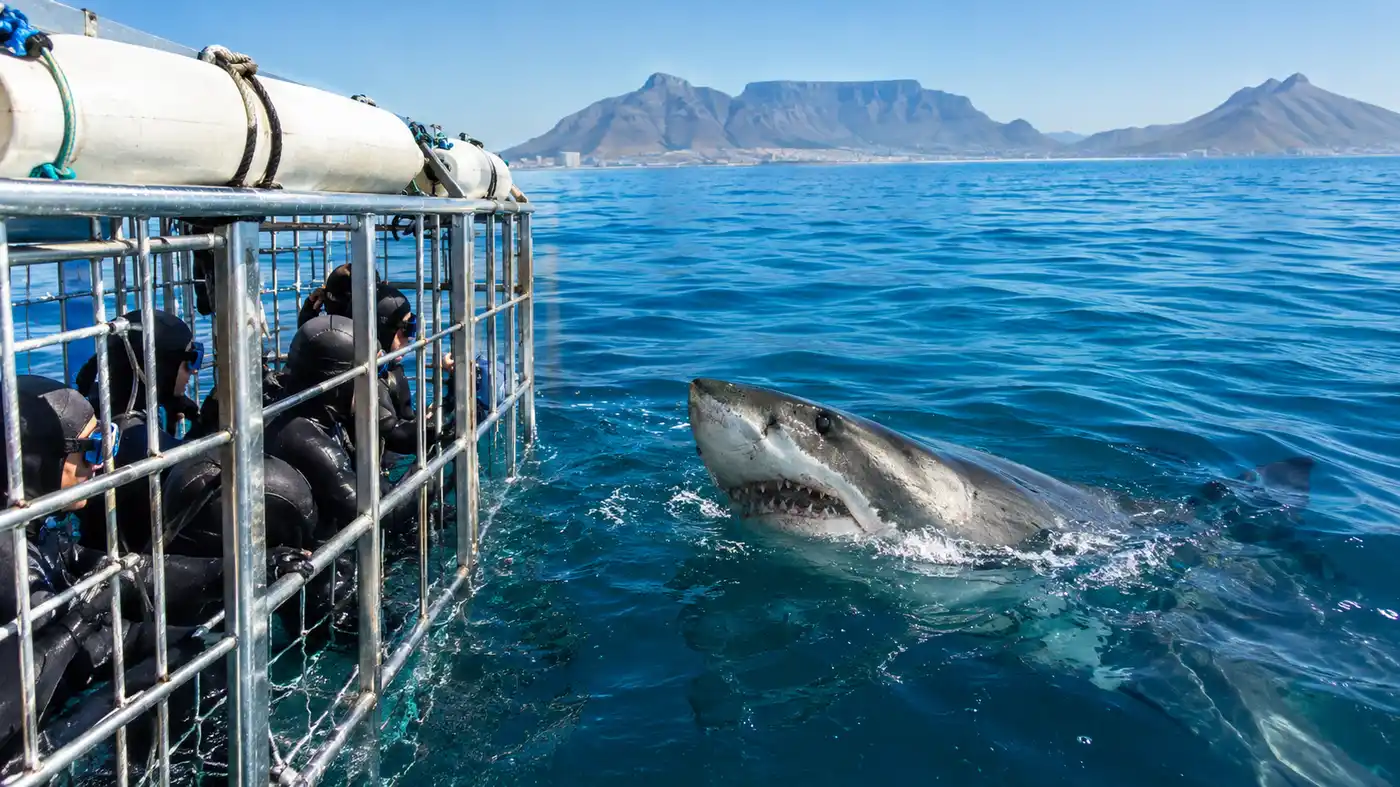
Great White Shark Cage Diving in Cape Town
The smell of pilchard oil hits your nose before the sun even clears the jagged outline of the Hottentots Holland mountains. You are standing on a wet deck at 6:45 in the morning, holding a chipped ceramic mug of instant coffee while the twin four-stroke outboards rumble beneath your boots. Most people sign up for white shark cage diving cape town thinking they will see a gaping jaw launch out of the water like something from a 1990s documentary film. Sometimes you do. More often, you spend forty minutes staring into pea-green Atlantic swell until a wide, pale silhouette slides out of the gloom right beneath your bare toes.
Things along this coastline have shifted quite a bit over the last few years. If you visited back in 2012, operators in False Bay could practically guarantee multiple great white sightings on a single morning anchor. Today, a pair of shark-eating killer whales, shifting water temperatures, and changing fish stocks have altered where these predators spend their time. Booking a great white shark dive cape town trip now requires an honest look at the geography, the seasons, and what is actually swimming around out there right now.
Book your shark cage diving cape town experience:
The Reality of White Shark Cage Diving Cape Town Today
It helps to know what you are walking into before handing over thousands of rands. Great white sharks in Cape Town used to gather consistently around Seal Island in False Bay, hunting the sixty thousand Cape fur seals crammed onto that slab of granite. Then, around 2017, two male orcas nicknamed Port and Starboard learned that great white livers are packed with squalene. They began hunting the local apex predators with surgical precision, ripping them open and leaving the carcasses on the beaches. The whites vanished from False Bay almost overnight.
So where does that leave you? Most operators marketing great white cage diving cape town now transport guests out to Gansbaai, roughly two and a half hours east along the N2 highway. Even there, sightings of great whites can be sporadic. Instead, visitors frequently come face to face with bronze whaler sharks, also called copper sharks. These animals grow up to 3.3 meters long, travel in active packs, and regularly circle within touching distance of the steel bars. Honestly, swimming with six aggressive bronze whalers often delivers more action than watching a single great white pass by once every two hours.
Note: Natural marine ecosystems cannot be scripted. If seeing an absolute, confirmed great white shark is your only benchmark for a successful day, you need to check recent boat logs before putting down a deposit, or you might end up feeling disappointed by a boatload of lively bronze whalers.
Every now and then, a massive female great white will swing through the bay, scattering the smaller sharks and reminding everyone on board why these animals command so much awe. When it happens, the entire deck goes dead silent. The bulk of a mature white shark cape town specimen is hard to comprehend until you see the water bulge as three thousand pounds of muscle turns beside the gunwale.
Where the Boats Go: False Bay, Gansbaai, and Mossel Bay
Where your boat launches determines your entire schedule. If an operator claims they run directly out of the Victoria and Alfred Waterfront in the city center, they are selling you a transfer bus, not a harbor slip. No commercial cage boats operate directly in Table Bay.
Simon's Town is the closest launch point, sitting about 45 minutes south of downtown Cape Town. Trips here head out into False Bay. While great whites are rare here currently, boats still run to view sevengill cow sharks, mako sharks, and pelagic blue sharks in the deep water offshore. The boat ride to the seals takes a quick 25 minutes, meaning less time battling open-ocean swells.
Gansbaai is the self-proclaimed capital of white shark diving cape town. The boats launch from a tiny harbor called Kleinbaai. From there, it is a short 15-minute run out to the channel between Dyer Island and Geyser Rock, a spot famously named Shark Alley. The shelter provided by the islands creates a calmer anchorage, though the open sea on the way out can still throw three-meter rollers your way on a windy morning. You can read our detailed breakdown on Gansbaai shark cage diving to see how that specific harbor works on a daily basis.
| Launch Location | Drive from Cape Town | Primary Shark Species Seen | Typical Water Clarity |
|---|---|---|---|
| False Bay (Simon's Town) | 45 - 60 minutes | Sevengill, Bronze Whaler, Pelagic Blues | 3 to 8 meters |
| Gansbaai (Kleinbaai) | 2 to 2.5 hours | Bronze Whaler, occasional Great White | 2 to 5 meters |
| Mossel Bay | 4.5 to 5 hours | Great White (juveniles and sub-adults) | 4 to 10 meters |
Mossel Bay sits further down the Garden Route. It is a long haul if you are staying in the city, but the bay there has become one of the most reliable places on the South African coast for juvenile great white sharks over the last three seasons. The water is generally calmer, warmer, and clearer than the cold upwellings around the Cape peninsula.
What Happens on a Great White Shark Dive Cape Town Trip
Your alarm will probably go off around 4:30 AM if you booked a morning launch in Gansbaai. A private shuttle or rental car takes you out past Somerset West, over Sir Lowry's Pass, and down through the rolling wheat fields of the Overberg. You reach the crew house, sign liability waivers, and eat a light breakfast of toast and scrambled eggs while watching a safety briefing delivered by a marine biologist.
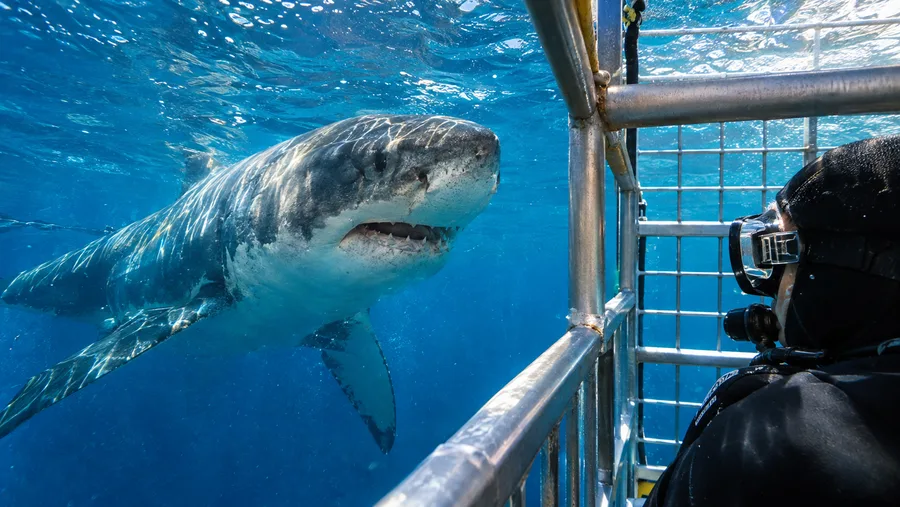
Out on the water, the crew drops an anchor along the reef line. A mixture of mashed sardines, tuna oil, and seawater - known locally as chum - is ladled into the current to create an oily scent slick. No solid meat is fed to the sharks. This distinction matters because the goal is to attract them through smell, not train them to associate humans or boats with a free meal. A wooden decoy cut in the rough shape of a seal often floats twenty yards behind the transom.
The cage itself stays tied securely to the side of the vessel, floating with its top edge roughly thirty centimeters above the water line. You do not need any scuba certification for cage diving with great white sharks cape town. Most operators use a breath-hold technique: you stand on a submerged platform inside the cage with your head in the air, holding onto internal handrails. When a shark approaches, the divemaster yells "down left" or "down right," and you simply pull yourself under the surface for twenty seconds with your mask on.
A few companies run surface-supplied air hoses, often called snuba or hookah systems. Personally, I think simple breath-holding works better. The air regulators hiss loudly underwater, which sometimes deters wary sharks, and the hoses have an annoying habit of tangling around your elbows when three people try to duck down at the exact same moment.
Book your shark cage diving cape town experience:
Best Great White Shark Diving Cape Town Timing and Seasons
Water along the western coast stays brisk year-round. It hovers anywhere between 11 and 16 degrees Celsius, meaning you will be pulled into a thick 7mm neoprene wetsuit, complete with booties and an optional hood. Winter brings the clearest visibility, but it also brings the roughest winter storms rolling off the Southern Ocean.
Timing your trip around the weather makes or breaks the whole experience. Winter months between May and August historically offered the peak action for cape town great white sharks, as adult sharks hunted young seal pups learning to swim. Summer months from November to February bring warmer water, calmer seas, and higher numbers of bronze whalers, with occasional great white sightings sprinkled through the mix. Checking our guide on the Cape Town shark diving season can help you align your calendar with the best sea conditions.
- Winter (May to August): Highest historical presence of mature great whites, better underwater visibility, but higher chance of boat trips being canceled due to heavy winter swells.
- Shoulder Season (September to November): Variable weather, decent shark activity, lower tourist numbers, and the added bonus of southern right whales breaching in Walker Bay.
- Summer (December to March): Calmer sea conditions, pleasant sunny boat rides, strong presence of bronze whalers, but lower odds of spotting a white shark.
If your schedule allows it, keep a three-day window open in your holiday itinerary. If the port captain closes the harbor on Tuesday due to gale-force southeaster winds, a flexible schedule means you can shift your booking to Wednesday without losing your money or missing out on the dive entirely.
Practical Advice for Surviving the Swell
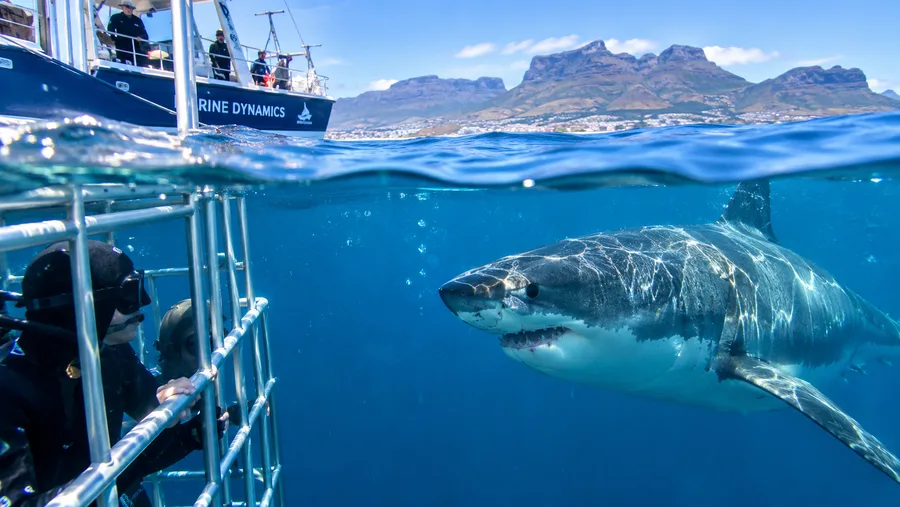
Sea sickness is the single biggest threat to your enjoyment. The cage boats are heavy catamarans or wide mono-hulls designed for stability, but sitting at anchor in ocean swell for three hours makes almost everyone feel off-balance eventually. Once nausea sets in, you will not care if a fifteen-foot fish is chewing on an anchor rope ten inches from your nose; you will just want to lay on the wooden deck and die.
Pro tip: Take an over-the-counter antihistamine motion sickness tablet the night before your trip, then take a second dose one hour before the boat leaves the harbor slip. Taking medication once you are already green in the face does nothing.
Action cameras need short hand grips rather than extendable selfie sticks. Crews ban long poles because they pose an entanglement hazard if an animal suddenly bolts through the surface. Set your camera to a wide frame rate before your hands get numb from the cold water, because fiddling with tiny touchscreen menus while wearing three-millimeter neoprene gloves inside a bouncing metal cage is nearly impossible.
- Pack warm layers: Even on a 30-degree summer afternoon in Cape Town, the wind off the Atlantic will chill you rapidly once you climb out of the water in a dripping wet suit.
- Bring dry clothes in a waterproof dry bag: The deck of a dive boat is constantly soaked with salt water, fish slime, and spray.
- Skip the heavy breakfast: Fried bacon and eggs from the harbor cafe mixed with diesel fumes and rolling waves create an immediate recipe for disaster.
- Rent the mask from the operator: Their masks are usually scrubbed with commercial anti-fog solutions that handle the temperature drop between cold ocean water and warm human skin far better than standard resort gear.
Pay attention to the crew. South African dive skippers are licensed under rigorous commercial transport regulations, and the deckhands spend roughly two hundred days a year reading the subtle body language of marine wildlife. If the skipper tells you to pull your hands inside the cage bars, do it immediately. These sharks do not view humans as prey, but their eyesight in murky green inshore water is mediocre, and a pale human hand gripping a stainless steel rail can easily be mistaken for a bit of floating fish scrap.
Frequently Asked Questions about white shark cage diving cape town
Do I need scuba certification to go shark cage diving in Cape Town?
No certification is needed. The cages stay secured flush against the side of the boat, floating at the surface with the divers' heads resting above water until a shark approaches. You simply hold your breath and pull down on the handrails when directed.
Are great white sharks guaranteed on every trip?
No wild animal experience can ever be guaranteed. Due to recent killer whale predation and regional migratory shifts, great white sightings are less predictable than they were a decade ago. Bronze whaler sharks are seen far more frequently on modern Gansbaai trips.
Is white shark cage diving safe for tourists?
The safety record for commercial operators in South Africa is exceptional. Heavy galvanized steel cages, strict maritime transport laws, and seasoned skippers keep risks minimal. Nobody has ever been injured by a shark inside a commercial cage in South Africa.
How cold is the water inside the shark cage?
Water temperatures around Gansbaai and False Bay typically range between 11 and 16 degrees Celsius (52 to 61 degrees Fahrenheit). Operators provide thick 5mm to 7mm wetsuits, booties, and hoods to keep you warm during your 20-to-30-minute shifts inside the cage.
Quick Reference
- Main departure point: Kleinbaai Harbor, Gansbaai (2.5 hours east of city)
- Typical water temperature: 11°C to 16°C (thick wetsuit supplied)
- Average time in cage: 20 to 35 minutes across several turns
- Common shark species: Bronze whalers, sevengill sharks, occasional great whites
Book your shark cage diving cape town experience:
The Bottom Line
Do not let changing migratory patterns or the rise of bronze whaler sightings put you off booking. Lowering yourself into the freezing green water of the Atlantic while wild apex predators cruise past the mesh is one of the rawest natural encounters left on the continent. Even if a great white decides not to show on your specific morning, watching a three-meter copper shark roll its pale eye toward you through the surf will stay burned into your memory long after your wetsuit has dried. Book early, take your motion sickness pills, keep an open mind about what species surfaces, and respect the wild nature of this turbulent coast.
Read more about shark cage diving cape town.