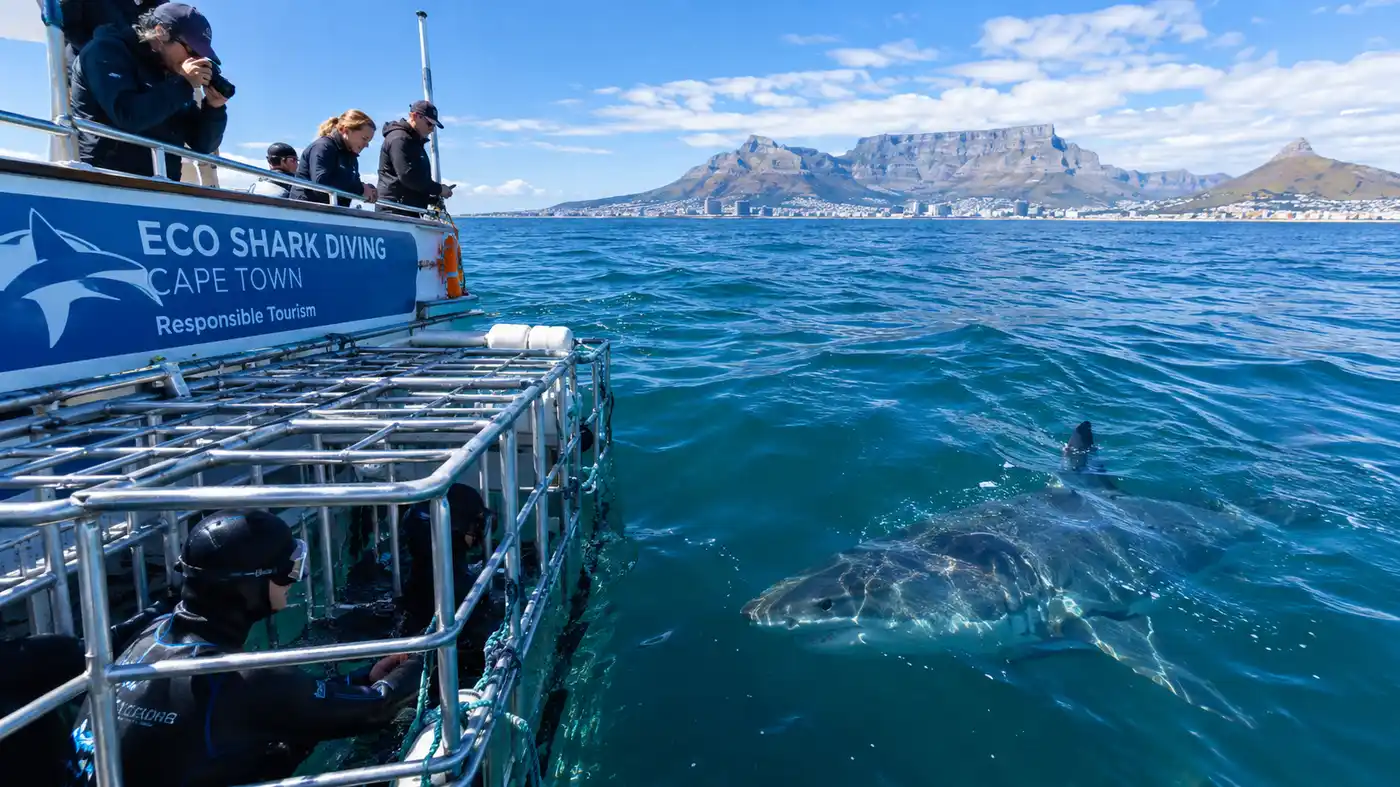
Eco Shark Diving in Cape Town Responsible Tourism
The smell of diesel hits your nose first, cutting through the salt air in the pale gray of dawn at Simon's Town pier. You look down into cold green water, wondering if dropping into an iron cage to watch apex predators is an act of ocean conservation or just commercial exploitation. When done right, eco shark diving in cape town responsible tourism manages to bridge that uncomfortable gap, turning curious travelers into vocal defenders of creatures people usually fear.
Things have shifted drastically around the Cape Peninsula over the past six years. Orcas drove out the great whites, sevengill cow sharks moved into shallow kelp forests, and bronze whalers filled the gap off Dyer Island. The local industry had to adapt. Travelers looking to experience these waters ethically must now look far past glossy marketing brochures and dramatic social media clips.
Book your shark cage diving cape town experience:
What Eco Shark Diving in Cape Town Responsible Tourism Actually Looks Like
Let us be clear about the setup. You are not petting a seal or nursing an injured penguin. You are stepping onto a boat that uses a scent slick to lure wild predators so humans can observe them up close. Some people find that intrusive. Having spent twenty years around dive skiffs, I think seeing a three-meter bronze whaler eye you through clear water does far more for conservation than any television documentary ever could.
True eco-tourism in this field means zero feeding. Responsible outfits use minced fish offal mixed with seawater to create an oily surface slick. That is chumming, not feeding. The shark catches the scent trail, follows it to the boat, investigates, realizes there is no free meal, and swims off whenever it feels like it. If an operator throws bait directly down a shark's throat to keep it entertained, that is a circus act. Feeding teaches wild animals to associate boats with an easy handout, which creates serious problems near public beaches.
A reputable operation always carries a marine biologist on deck. These researchers take tissue biopsies, log water temperatures across different depths, and photograph dorsal fins for tracking databases. You essentially act as ballast and financial backing for ongoing field science. It turns what could be a tacky tourist trip into a working ocean survey.
The mood on an ethical boat is quiet. There is no loud rock music blasting from marine speakers. Crew members speak in measured tones, explaining the social hierarchies of bronze whalers or why broadnose sevengills have survived unchanged since the Jurassic era.
Chumming Myths, Baiting Rules, and Marine Impact
South Africa protected great white sharks back in 1991, leading the world in marine predator legislation. Today, the Department of Forestry, Fisheries and the Environment issues a limited number of commercial operating permits. Boats carry GPS loggers, and fisheries inspectors drop in unannounced at coastal slipways to check equipment and logs.
A common myth claims cage diving turns sharks into aggressive man-eaters near swimming beaches. The science does not back that up. Researchers in False Bay tracked acoustic tags over an eight-year period and found zero link between commercial boat trips and inshore shark activity. Sharks roam along migratory routes dictated by fish runs and water temperatures. They do not hang around dive boats for days because there is nothing to eat.
Note: Weather cancels more shark excursions than wildlife absences. High southeasterly winds can turn the bay into a churning washing machine, so keep your travel schedule open for at least 48 hours around your planned launch date.
Impact goes beyond bait. Acoustic disturbance matters just as much. When three heavy catamarans idle within two hundred meters of each other, low-frequency engine rumble rattles the seabed. Responsible skippers cut their engines completely once anchored, drifting on a bridle to keep the underwater soundscape natural.
Plastic management on these vessels must be ruthless. Open trash cans on a pitching boat deck mean empty chip packets and wrappers end up in the sea within minutes. The best crews ban single-use items entirely before passengers even leave the marina gate.
How to Spot an Ethical Operator on the Western Cape
Walking down long tourist strips in Cape Town can leave your head spinning. Street kiosks display laminated photos of massive sharks breaching out of the water, promising guaranteed encounters within sixty minutes of leaving port. Run the other way. Real wildlife follows no schedule, and ethical operators will tell you straight out that nature guarantees nothing.
Check the company background before paying a single rand. Reputable outfits collaborate directly with groups like Shark Spotters or the Dyer Island Conservation Trust. They openly share their research papers, permit numbers, and data logs on their websites.
Look for these specific practices when picking a crew:
- Bait handling ethics: Handlers must snatch the bait out of the water well before the shark reaches it, preventing injuries or mouth trauma.
- Passenger caps: Ethical outfits limit capacity to under twenty guests per trip, keeping the vessel stable and avoiding chaotic crowd noise.
- In-depth briefings: Look for safety talks that spend at least twenty minutes on shark biology, sensory systems, and local conservation issues.
- No chemical additives: Chum slicks must consist only of natural marine oils and ground sardines, never synthetic scents or mammal blood.
If your travel takes you eastward toward Walker Bay, take a look at our breakdown on Gansbaai shark cage diving what you should know, because sea conditions and animal species vary considerably between launch sites.
Pay attention to how the crew talks about the animals. If they use words like "monster" or "killer" to drum up cheap thrills, you are on the wrong vessel. Ethical outfits treat sharks with quiet respect.
Book your shark cage diving cape town experience:
Comparing Western Cape Shark Diving Locations
Different coastal points along the Western Cape offer distinct marine environments, water clarities, and conservation focuses. Choosing the right spot depends on your tolerance for long drives and open ocean swells.
| Harbor | Drive from Cape Town | Primary Shark Species | Key Eco Advantage |
|---|---|---|---|
| Simon's Town (False Bay) | 45 minutes | Sevengill, Bronze Whaler | Short transit times minimize engine emissions and fuel burn |
| Gansbaai (Kleinbaai) | 2.5 hours | Bronze Whaler, occasional White Shark | Direct funding pipeline for Dyer Island scientific studies |
| Mossel Bay | 4.5 hours | Juvenile White Shark | Calm bay conditions with strict sanctuary zoning rules |
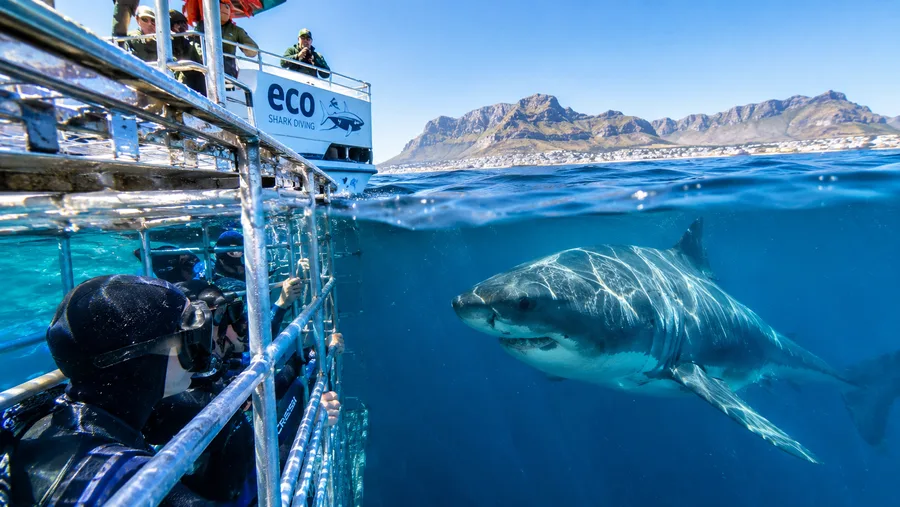
Simon's Town offers the shortest journey. You wind down through coastal suburbs, hop on the vessel, and reach the dive site near Seal Island in roughly twenty-five minutes. The water here is deep green, filtered through massive beds of sea bamboo. The local ecosystem remains dynamic, especially since two notorious killer whales began hunting sevengill sharks in the shallows.
Gansbaai is a longer haul. You leave the city before sunrise, crossing Sir Lowry's Pass while mist still clings to the apple orchards of Elgin. Kleinbaai harbor looks rustic, with tractors launching heavy vessels down a narrow concrete slip into raw Atlantic rollers. Yet the research footprint here is massive, driven by decades of field studies on pelagic fish and marine apex predators.
Mossel Bay sits further east along the Garden Route. Its protected bay offers calmer waters, making it ideal for travelers worried about severe seasickness. The bay serves as a nursery area for young white sharks, giving marine biologists a steady platform to study juvenile behavior.
What to Pack and Expect on an Eco-Conscious Excursion
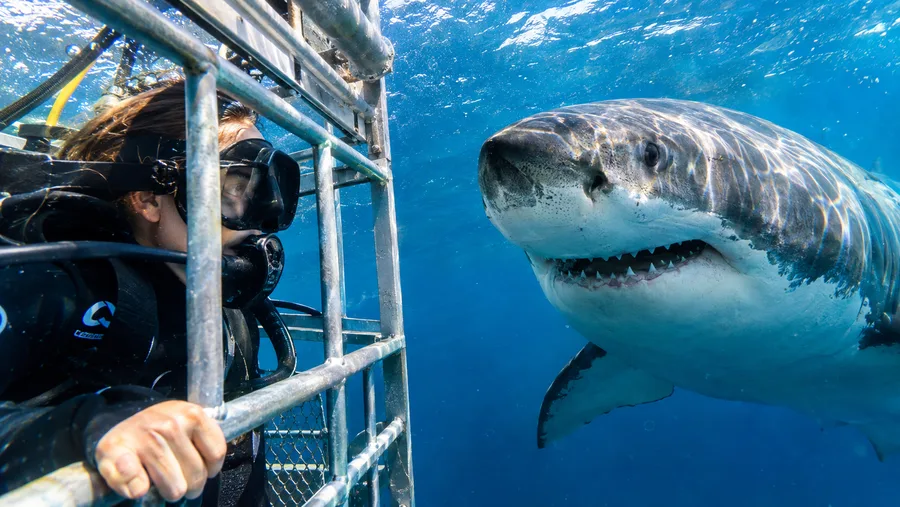
Nothing prepares your lungs for fourteen-degree Atlantic seawater. Even inside an eight-millimeter neoprene suit, that initial flush across your chest will steal your breath away for five seconds. Your skin turns pink. Your fingers stiffen. After three minutes, your body warms the thin layer of water trapped against your skin, and your attention shifts completely to the green void beneath the cage.
The cage stays firmly tied to the side of the boat. Its top sits roughly thirty centimeters above the surface, meaning you never dive deep or need complex scuba gear. You hold onto internal handrails, pull yourself down when a shark approaches, and pop your head up into open air whenever you want to breathe.
Pro tip: Take a cinnarizine-based motion sickness pill roughly sixty minutes before your vessel leaves the jetty, even if you never get sick on larger ferries.
Safety extends to how you handle yourself inside the water. People often ask about physical danger, which we analyzed in our article exploring if is shark cage diving safe in Cape Town. In reality, erratic splashing or banging on the metal frame does not attract sharks; it repels them. Calmer divers always get closer passes.
Keep these personal items in your daypack:
- Reef-safe mineral sunscreen: Chemical lotions containing oxybenzone damage coastal reefs and kelp holdfasts.
- Thick wool socks: Slip these on inside the shared dive booties to keep your toes from going numb in the cage.
- Polarized sunglasses: Cutting the surface glare helps you spot dark shapes circling twenty feet down long before they reach the surface.
- Windproof jacket: The Atlantic breeze cools you rapidly once you step out of the cage onto the open deck.
Warm vegetable soup and dry bread rolls usually appear on the cabin table on the way back. Nothing on earth tastes quite as good as hot broth after forty minutes in the South Atlantic.
Frequently Asked Questions about eco shark diving in cape town responsible tourism
Does cage diving alter natural shark hunting patterns?
Long-term acoustic telemetry data indicates that occasional scent slicks do not disrupt natural predatory cycles. Sharks visit the boats briefly out of curiosity, find no substantial food rewards, and resume hunting local seal colonies or schooling fish.
What happens if no sharks show up during our trip?
Ethical companies never chase wildlife or force encounters using heavy food lures. If sharks do not appear, good operators explain the ecological shifts at play and often issue a return voucher valid for twelve to twenty-four months.
Are great white sharks seen on every dive trip?
No. Great white sightings along the Cape Peninsula and Gansbaai have dropped significantly due to killer whale predation and shifting prey distributions. Most trips today focus on bronze whaler sharks and broadnose sevengill cow sharks.
Quick Reference
- Water temperatures range between 12 and 16 degrees Celsius
- Trips typically last 3 to 4.5 hours on the water
- Vessels operate year-round, subject to ocean swell
- No scuba certification required for surface cages
Book your shark cage diving cape town experience:
The Bottom Line
Getting in the water with ocean predators tests your nerve, but picking an ethical operator turns an adrenaline rush into meaningful support for marine science. When you choose outfits that respect baiting boundaries, support working field biologists, and treat False Bay with care, your ticket helps fund the preservation of some of the most misunderstood animals on the planet. Ask tough questions before you book, pack plenty of warm layers, and keep your hands inside the bars.
Read more about shark cage diving cape town.