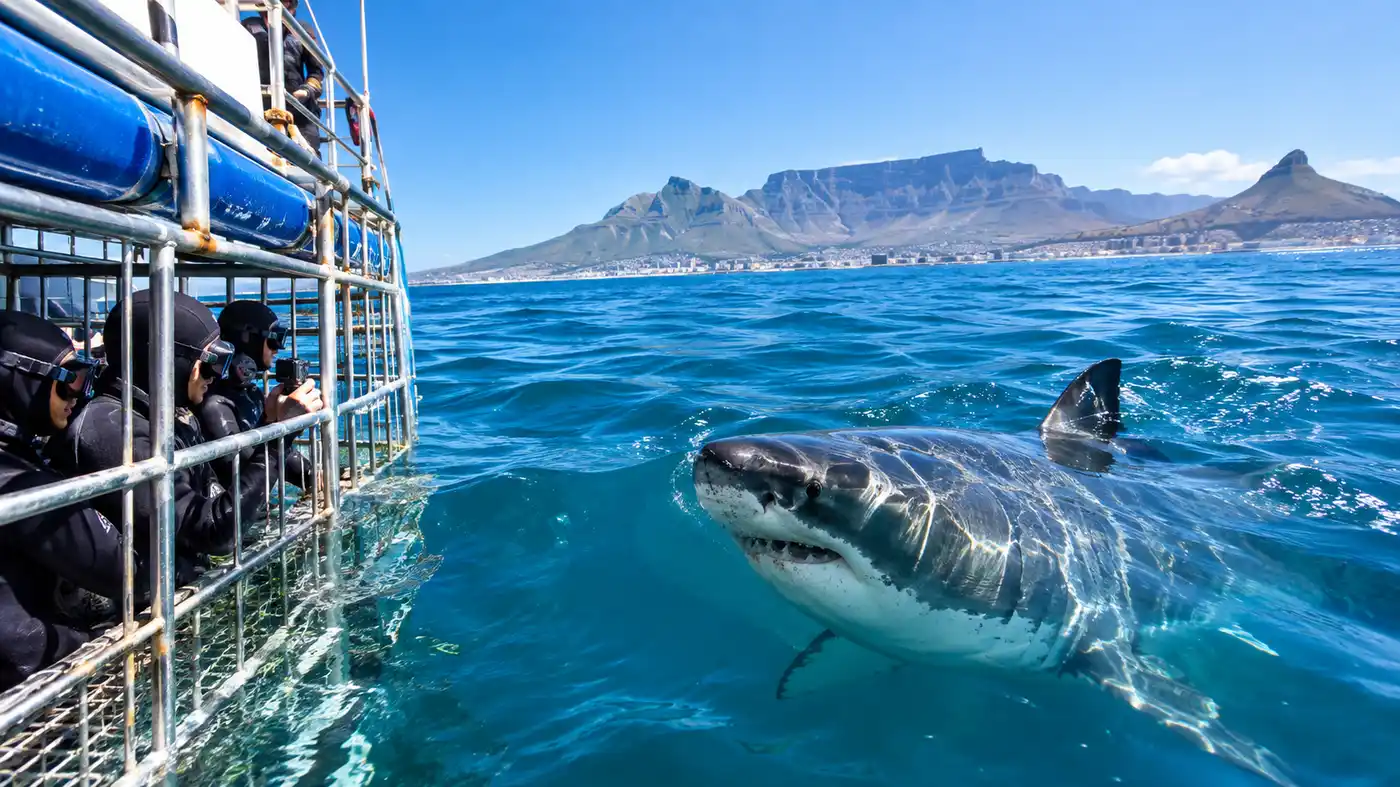
Great White Sharks in Cape Town Facts Behavior Habitat
Standing on the rocky overlook along Boyes Drive above Muizenberg, you realize how close the wild ocean sits to daily urban life. Down below, surfers paddle in murky surf while observers from the Shark Spotters program scan the green water with polarized binoculars, watching for shadows. The story of cape town sharks is not a Hollywood horror script. It is an evolving marine mystery that stretches from the cold kelp forests of the Atlantic seaboard to the deep, seal-crowded waters of False Bay.
For decades, South Africa has been the undisputed global focal point for studying these massive apex predators. People travel across the world hoping to see a great white shark cape town style, bursting entirely out of the water while hunting Cape fur seals. Yet the ocean rarely stays predictable. Recent shifts in marine ecology, unexpected predatory visits from killer whales, and changing water temperatures have rewritten what we know about where these animals travel and how they survive.
Book your shark cage diving cape town experience:
The Rise and Mystery of Cape Town Sharks in False Bay
False Bay once held the densest seasonal congregation of large white sharks on earth. Seal Island, a barren granite rock roughly 800 meters long and sitting five kilometers offshore from Simon's Town, hosts around 64,000 Cape fur seals. Between April and September, young seals must leave the safety of the rock to feed in deep water. Waiting below in the depths was the white shark south africa had become legendary for, patrolling a trench known chillingly as the Ring of Death.
Between 2015 and 2019, things changed drastically. Sightings dropped from hundreds per season to absolute zero in False Bay over several consecutive months. Local commercial fishers noticed the silence first, and cage diving boats spent entire weeks sitting over empty chum slicks. Marine biologists soon identified two coastal killer whales, nicknamed Port and Starboard, recognizable by their distinct floppy dorsal fins. These orcas began hunting white sharks specifically for their nutrient-rich, squalene-packed livers, washing mutilated shark carcasses ashore on beaches from Gansbaai to Mossel Bay.
The fear of predation drove the sharks away. Some critics argued coastal longline fishing for smaller shark species had depleted the food chain, while others pointed directly to the killer whales. The truth is likely an overlapping mix of both. Great whites are intelligent enough to abandon an area when an apex predator above them begins systematically hunting their peers.
Note: While white sharks occasionally cruise past False Bay beaches again, sightings remain intermittent compared to the peak years between 2000 and 2015. Always check the colored flag system run by local beach spotters before paddling out.
Today, bronze whaler sharks have moved in to fill the vacated niche at Seal Island. These sleek, copper-colored hunters can reach over three meters long and gather in schools of dozens. Tourists who sign up for trips expecting a lone giant often end up surrounded by ten energetic bronze whalers instead, which makes for thrilling viewing even if the star of the show has shifted eastward.
Where Great White Sharks Live: Habitat and Coastal Migration
Where do great white sharks live along the African continent? They are migratory wanderers. They roam from the cold waters of Namibia on the west coast, down around the Cape Peninsula, and up through the warmer Indian Ocean waters of the Eastern Cape and KwaZulu-Natal. The species requires temperate coastal shelves where shelf breaks and rocky reefs produce productive upwelling zones rich in fish, rays, and marine mammals.
In winter, south africa great white sharks hug the coastline, hunting seals around offshore colonies. Come summer, they often push into inshore shallows and sandy surf zones, tracking game fish like yellowtail and smaller shark species. If you want to know where to find them today, the answer usually involves driving a few hours east of the Cape Peninsula. Gansbaai, known for decades as the great white shark capital of the world, still sees periodic action, though places like Mossel Bay and Algoa Bay have recently recorded much higher counts.
The table below breaks down the key coastal zones in the region, comparing what travelers and researchers encounter across the main shark hubs:
| Location | Distance from Cape Town | Primary Shark Species Today | Peak Season | Average Water Temp |
|---|---|---|---|---|
| False Bay (Simon's Town) | 45 km (1 hour) | Bronze Whaler, Sevengill Cowshark | October - April | 14°C to 19°C |
| Gansbaai | 165 km (2.5 hours) | Bronze Whaler, sporadic Great White | May - August | 13°C to 17°C |
| Mossel Bay | 390 km (4.5 hours) | Juvenile & Sub-adult Great White | Year-round (Best June - Aug) | 15°C to 21°C |
| Algoa Bay (Gqeberha) | 760 km (9 hours) | Great White, Ragged-tooth, Hammerhead | November - April | 16°C to 22°C |
For visitors organizing a trip, checking out the shark cage diving near cape town locations explained guide helps clarify why tour operators sometimes transfer bookings between towns based on animal movements. Understanding the geography spares you disappointment when an operator explains that weather or wildlife migrations require a morning road trip.
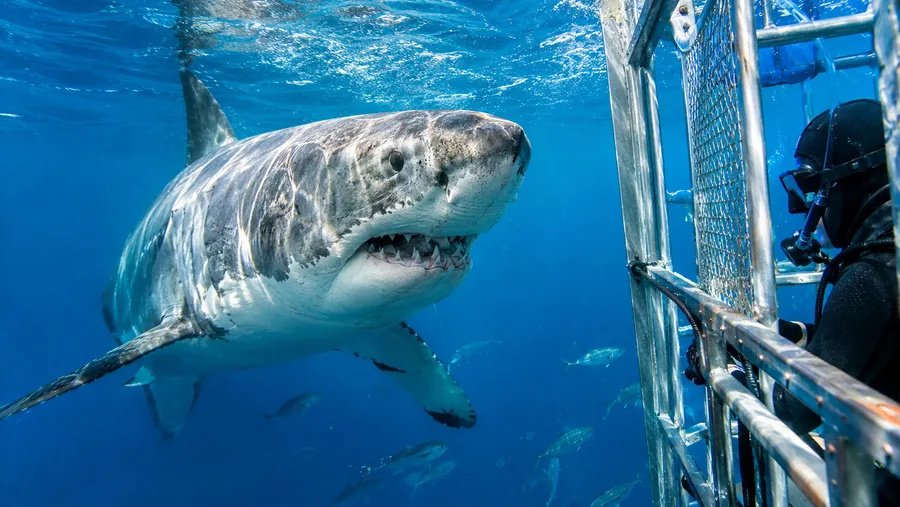
Great White Shark Social Behavior Off Cape Town and Hunting Tactics
The hunting technique of great whites in South Africa differs noticeably from how the same species hunts off Guadalupe Island in Mexico or the Farallon Islands in California. False Bay developed a distinct predatory behavior because of its underwater topography. Around Seal Island, the water drops abruptly to depths between 25 and 32 meters. This depth provides perfect cover.
A hunting white shark cruises just above the seabed, blending its dark dorsal surface against the dim granite floor. Looking up against the bright water surface, it spots the silhouette of a seal swimming back from offshore feeding grounds. The attack happens at explosive speed. Accelerating vertically at roughly 40 kilometers per hour, the shark hits the seal from beneath, using raw kinetic force to stun or kill it immediately. This momentum frequently carries a two-ton animal completely into the air, creating the aerial breach that photographers spend lifetimes trying to capture.
Social dynamics among white sharks are equally intricate. They are not mindless solitary cannibals wandering without purpose. Size dictates respect in their world. When several sharks congregate near a feeding site, clear rituals prevent deadly fights:
- Size hierarchy: Larger animals always receive right of way over smaller individuals without physical altercations.
- Pectoral fin displays: A dominant shark will drop its pectoral fins downward in a rigid posture to warn off competitors.
- Tail slap maneuvers: Surface tail-slapping pushes a concussive shockwave through the water toward an intruding shark to assert territory.
- Body scarring patterns: Many adult white sharks carry parallel bite marks across their flanks, acquired during dominance scuffles or aggressive mating rituals rather than fights to the death.
If you plan to enter the water on a commercial boat trip, reading up on great white shark cage diving in cape town will give you a clear sense of what that surface activity looks like from inside an underwater viewing box.
Pro tip: If you book a morning boat trip, skip greasy fried food before boarding. The Atlantic swell off the southern Cape rolls continuously, and boat engines drifting on chum slicks will test your stomach quickly.
Book your shark cage diving cape town experience:
Encountering Cape Town Sharks: Safety, Spotters, and Local Species
People often ask: are there sharks in Cape Town? Of course. Millions of fish and thousands of seals call this coastline home, so predators will always share the water with humans. What keeps beachgoers remarkably safe is the award-winning Shark Spotters organization, founded in 2004 following several high-profile interactions along the False Bay coast.
Trained spotters stand on high mountain lookouts above popular beaches like Muizenberg, Fish Hoek, St James, and Clovelly. Equipped with polarized sunglasses and binoculars, they scan the shallow surf. When an animal cruises into the bay, they track its path. If it moves too close to swimmers, a spotter radios the beach crew, an air-raid siren blares across the sand, and lifeguards clear the water in minutes.
They use an intuitive, four-flag warning system that every beach visitor should memorize before stepping onto the sand:
- Green Flag: Spotting conditions are clear and good; no sharks have been seen.
- Black Flag: Spotting conditions are poor due to cloud cover, wind, or murky water; swim with caution.
- Red Flag: High shark alert; a shark has been seen recently, or conditions make presence likely.
- White Flag with Black Shark: Shark detected nearby; the siren has sounded, and the water is completely closed.
It is worth remembering that what sharks are in Cape Town waters goes far beyond great whites. You will find broadnose sevengill sharks patrolling the towering kelp forests of Miller's Point, pyjama catsharks sleeping in rocky crevices, leopard catsharks hunting mollusks, smooth-hound sharks darting through shallow estuaries, and offshore pelagic species like mako and blue sharks hunting schooling tuna miles past Cape Point.
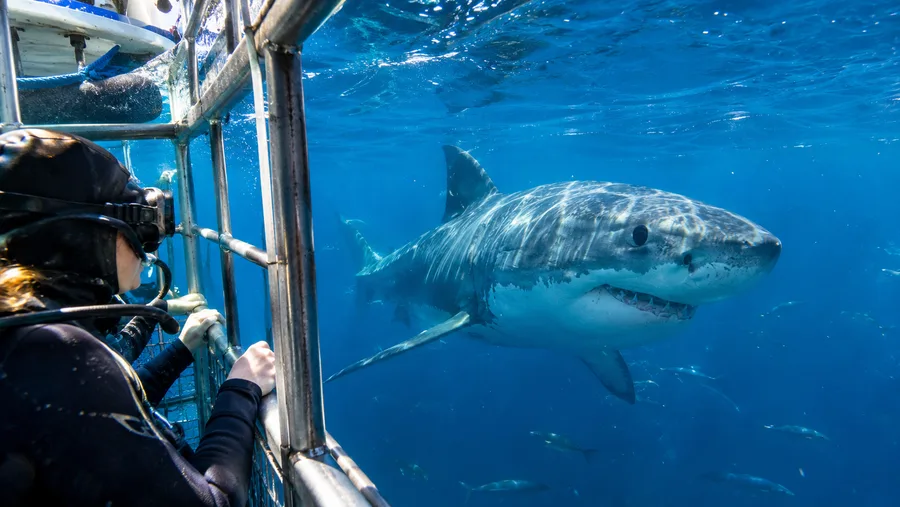
Conservation Realities and the Future of Great White Sharks South Africa
South Africa made history in 1991 by becoming the very first country in the world to declare the great white shark a strictly protected species. Before that decree, sport hunters and commercial trophy collectors regularly killed these animals for their jaws and fins. Decades later, however, the population remains under immense pressure from human activity and environmental instability.
In KwaZulu-Natal on the east coast, the Sharks Board still deploys miles of gillnets and baited drumlines to protect resort beaches. While these nets aim to reassure tourists, they act as indiscriminate death traps, drowning hundreds of white sharks, tiger sharks, turtles, and dolphins over the course of every decade. Independent marine scientists have long advocated for replacing these lethal nets with modern non-lethal electrical barriers or spotter programs like the one successfully protecting Cape Town beaches.
Another mounting concern is the legal demersal shark longline fishery along the southern Cape. By targeting smaller coastal shark species like soupfin and smooth-hound sharks for export to international fish-and-chip markets, this industrial fishery removes the foundational prey that adolescent white sharks rely upon before they grow large enough to hunt marine mammals.
Protecting great white sharks in South Africa requires looking at the marine system as an interconnected whole. When you pull one thread out of the web, whether by overharvesting prey fish or allowing targeted hunting, the entire ecosystem stumbles. The shifting patterns observed along the Cape Peninsula remind us that humans are merely visitors along a wild, untamed coastline.
Frequently Asked Questions about cape town sharks
Are there great white sharks in Cape Town right now?
Yes, but their numbers in False Bay remain far lower than in previous decades. Individual sharks still cruise past coastal beaches occasionally, but sightings are sporadic rather than daily, with many animals shifting their range toward Mossel Bay and Algoa Bay.
Why did great white sharks leave False Bay?
The primary trigger was targeted predation by a specialized pair of killer whales hunting white sharks for their livers, alongside localized depletion of their primary fish and smaller shark prey species due to commercial longlining.
Where is the great white shark capital of the world?
Gansbaai, located about 165 kilometers east of Cape Town, earned that title because of the narrow, seal-filled channel between Dyer Island and Geyser Rock known as Shark Alley.
What other sharks live around Cape Town?
The Cape Peninsula hosts bronze whaler sharks, broadnose sevengill cowsharks, spotted gully sharks, pyjama catsharks, shortfin mako sharks, and pelagic blue sharks in deeper offshore water.
Quick Reference
- First protected globally by South Africa in 1991
- Can breach up to 3 meters out of the water
- Seal Island False Bay holds roughly 64,000 seals
- Primary local monitoring handled by the Shark Spotters program
Book your shark cage diving cape town experience:
My Take on Seeing Great Whites in South Africa
If you visit Cape Town expecting guaranteed, dramatic circus stunts from a great white shark, you might find yourself feeling disappointed. The ocean does not work on an itinerary. Seeing these magnificent apex animals today requires genuine patience, a willingness to drive a couple of hours along the coastal highway toward Gansbaai or Mossel Bay, and a deep respect for the complex marine shifts currently reshaping South African waters. When you do catch a glimpse of that unmistakable silhouette gliding through the dark green water, whether from a boat deck or a high cliff trail above False Bay, it is an encounter you will never forget.
Read more about shark cage diving cape town.