Shark Cage Diving in Cape Town Complete Visitor Guide
The alarm usually goes off at 04:15. Outside your hotel window, the Atlantic wind is likely rattling the glass, and the thought of voluntarily submerging your body into 14-degree water sounds slightly insane. Still, you grab a thermos of rooibos tea, pull on three layers of fleece, and wait by the curb for a white minibus. If you are holding this shark cage diving in cape town complete visitor guide in your hands while planning your South African journey, you probably want the unvarnished reality rather than glossy brochure promises. The ocean here is wild, raw, and completely indifferent to tourist expectations.
Most visitors arrive in the Western Cape imagining great whites leaping out of the water like something from a television documentary. The reality on the ground has changed quite a bit over the last few years, mostly thanks to a pair of shark-hunting orcas named Port and Starboard. Today, an outing to see these predators involves different locations, shifting species, long early-morning drives, and a fair amount of waiting around in salty swell. It remains one of the most intense wildlife encounters on earth, provided you know what you are actually booking.
Book your shark cage diving cape town experience:
Where the Boats Launch: Gansbaai vs False Bay
Most people searching for shark cage diving south africa cape town assume the boats leave directly from the V&A Waterfront. They do not. City regulations, maritime traffic, and shark movements mean you will be driving well beyond the city bowl before you ever smell chum.
Gansbaai is where roughly 80 percent of tourists end up. It sits about 165 kilometers southeast of the city, tucked behind the jagged peaks of the Overberg. The drive takes around two and a half hours, cutting past apple orchards in Elgin and dropping through Hermanus. The boats here operate in an offshore channel nicknamed Shark Alley, between Dyer Island and Geyser Rock. It is home to roughly 50,000 Cape fur seals. That immense colony is basically an open-water buffet, which explains why the sharks patrol the channel so faithfully.
False Bay is much closer to town, launching out of the old naval harbor at Simon's Town about 45 minutes south of the city center. Historically, this was the kingdom of the flying great white shark around Seal Island. Things shifted dramatically after 2017 when orcas moved into the bay and began hunting the apex predators for their nutrient-rich livers. Great whites vanished from False Bay for long stretches. Today, operators running out of Simon's Town focus heavily on bronze whaler sharks and prehistoric broadnose sevengill sharks, running out to deep water pelagic zones when conditions allow.
Mossel Bay is technically an option too, though it sits nearly four hundred kilometers up the Garden Route. Some travelers make the trek when Cape Town weather shuts down local harbors for days at a time.
| Launch Location | Distance from Cape Town | Primary Sharks Seen | Average Water Temp | Typical Cost (ZAR) |
|---|---|---|---|---|
| Gansbaai | 165 km (2.5 hours) | Bronze Whalers, Broadnose Sevengill, occasional Great White | 13°C to 17°C | R2,400 - R3,200 |
| Simon's Town (False Bay) | 40 km (50 minutes) | Bronze Whalers, Sevengill, Pelagic species (Blue, Mako) | 14°C to 18°C | R2,700 - R3,500 |
| Mossel Bay | 390 km (4.5 hours) | Great Whites, Bronze Whalers | 15°C to 20°C | R2,200 - R2,900 |
If your sole goal is finding a great white, you should read our breakdown on Gansbaai shark cage diving before booking, as sightings of that specific species fluctuate month to month. Bronze whalers, which grow to three meters and show up in energetic packs of ten or twelve, have become the stars of the show in both regions.
The Reality of Cape Town Shark Cage Diving: What Happens at Sea
You arrive at the crew's coastal base around seven in the morning for safety briefings, warm eggs, and bad instant coffee. Then you walk down the jetty to board a custom-built catamaran carrying anywhere from 15 to 30 passengers. The boat ride out to the drop zone takes twenty minutes in Gansbaai, sometimes slightly longer in False Bay.
Once the skipper drops anchor, the crew starts chumming. They use a mixture of crushed sardines, fish oil, and seawater. A wooden tuna head attached to a floating rope goes into the water to create an oil slick that drifts with the current. There are no fish hooks, and the operators do not feed the animals. Feeding them alters wild behavior and violates strict South African marine permits. The smell of slick fish oil hanging over a rolling boat is famously rough on the stomach.
Pro tip: Take your motion sickness pills the night before the trip, then take a second dose an hour before boarding the boat. Once you step onto the jetty feeling queasy, no amount of ginger or acupressure bands will save you.
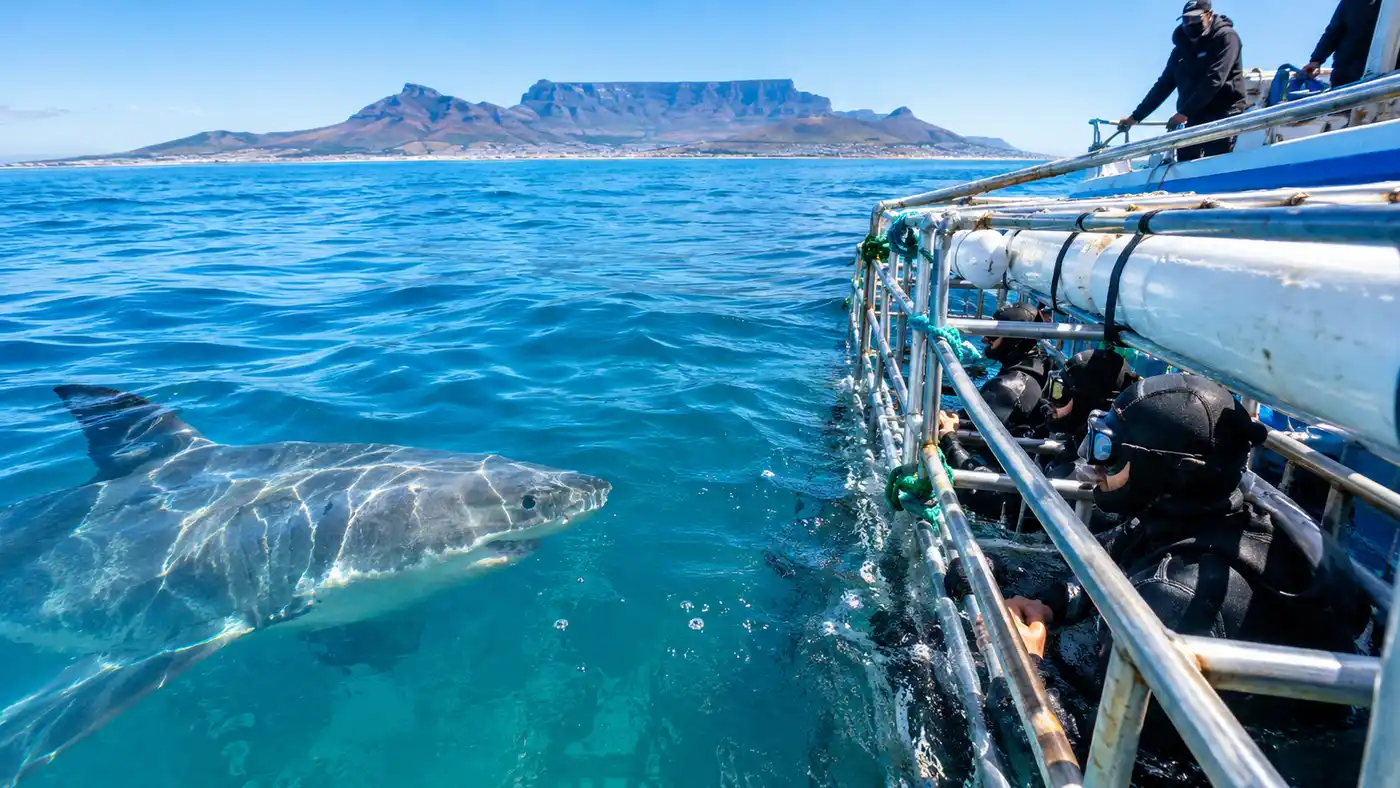
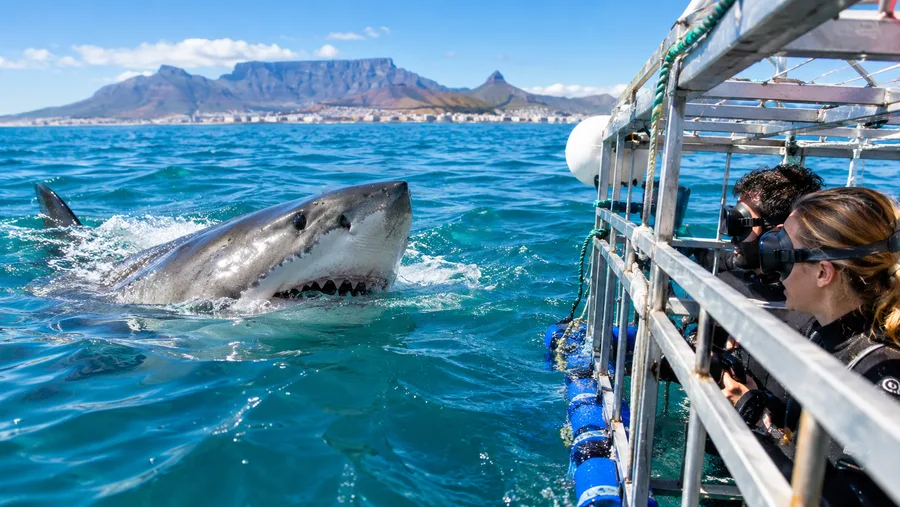
When a shark appears, it happens fast. The water is rarely aquarium-clear; it is a murky, rich emerald green with visibility ranging between three and eight meters. You are fitted into a thick 7mm wetsuit, booties, and a diving mask. No scuba certification is needed because the cages stay lashed firmly to the side of the boat, floating with their tops protruding about thirty centimeters above the surface. You do not use heavy air tanks. When a shark approaches, the divemaster yells "Down left!" or "Down right!", and you simply pull yourself down beneath the surface using internal handrails, holding your breath for twenty seconds.
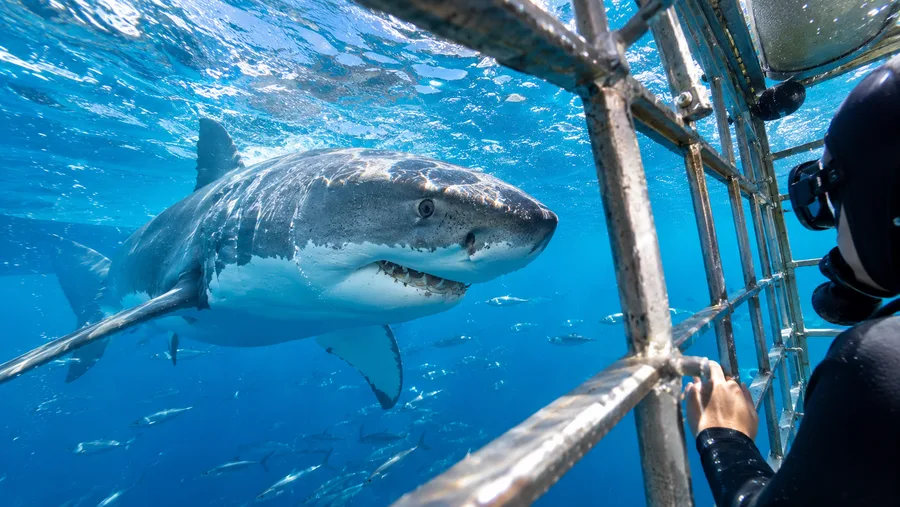
Looking through heavy galvanized steel bars into green water while a 250-kilogram bronze whaler glides past two feet from your face is surreal. Their skin looks like wet sandpaper, and their eyes roll back naturally when they brush against the mesh. You get numb to the cold after three minutes. Most operators give guests three or four rotations in the cage, giving everyone roughly twenty to thirty minutes of total submersion time.
Seasons and Sea Conditions for Shark Cage Diving Cape Town South Africa
Many travelers try to line up their diving with the warm summer months of December through February. That makes sense for vineyard lunches in Stellenbosch or tanning on Clifton beach, but ocean life plays by different rules.
Winter runs from May through September in the Western Cape. Counterintuitively, winter often brings the best underwater visibility, particularly in False Bay. Water clarity improves because prevailing winds shift to the northwest, reducing the churning coastal upwelling that clouds the bay during summer. Winter also corresponds to the peak hunting season around Seal Island, where juvenile seals are forced to leave the safety of the rocks to hunt offshore.
The trade-off is the weather above the surface. Cold fronts roll off the Southern Ocean every few days between June and August. These fronts bring five-meter swells and howling squalls that keep the fleet tied to the pier for three or four consecutive days. Checking the Cape Town shark diving season guide will help you understand how shifting water temperatures affect animal movements across different quarters of the year.
Note: Always book your shark excursion for the very first available day of your Cape Town itinerary. If wind or high swells scrub your launch, a reputable operator will roll your booking over to the following day.
Summer brings warmer air, flatter seas inside sheltered bays, and consistent sightings of bronze whaler sharks. Water temperatures hover around 16 degrees, which feels shockingly crisp if you are used to the Caribbean. Visibility can drop to two meters after strong southeasterly winds blow for forty-eight hours straight, turning the water into what locals call "pea soup." Even on low-visibility days, seeing a dark silhouette emerge suddenly from green fog has its own intense charm.
Book your shark cage diving cape town experience:
What to Bring and How to Prepare
People pack the wrong things for this trip constantly. They bring designer beach towels, skimpy swimsuits, and bulky cameras without waterproof housings. You are heading out onto the open South Atlantic, where spray flies over the gunwales and wind cuts straight through cotton.
Space on board is tight. You will share a small cabin or deck space with twenty other travelers who are all peeling off soaked neoprene suits at the same time. Pack minimal gear in a dry bag:
- Warm windproof jacket: fleece-lined waterproof outer shells are best, as the ride home into the wind gets freezing.
- Quick-drying base layer: wear your swimsuit under your clothes in the morning so you do not have to struggle into it inside a pitching marine head.
- Small dry bag: keep your passport, wallet, phone, and dry socks completely sealed away from salt spray.
- High-SPF mineral sunscreen: sun reflects off open water fiercely, even beneath overcast Atlantic cloud cover.
- Prescription dive mask: if you wear strong glasses, borrow or rent an optical mask beforehand since glasses do not fit under standard dive masks.
GoPro cameras work brilliantly on short selfie sticks. Keep the stick short, roughly thirty centimeters, because poking a long pole out through the cage bars is strictly forbidden by skippers. Sharks can run into long poles, damaging their sensitive snouts, or bite down on camera housings. Hand straps are essential. If you drop your camera inside the cage, it falls through the floor grating and settles seventy feet down on the rocky ocean floor.
Coastal Spots and Cape Town Shark View Points
You do not always have to step into an iron cage to spot marine life in this corner of the continent. The topography of the Cape Peninsula features sheer granite cliffs dropping straight into deep bays, creating natural amphitheaters for spotting animals from terra firma.
If you prefer keeping your feet dry while scanning the ocean, these shorelines offer realistic chances of spotting marine predators during calm weather:
- Boyes Drive above Muizenberg: high above False Bay, this mountain road gives an eagle-eye view over the surf breaks where sharks occasionally pass beyond the backline.
- Clarence Drive near Rooi-Els: this winding cliffside road skirts the eastern boundary of False Bay, offering elevated pull-offs overlooking clear, deep kelp channels.
- Shark Spotters Lookout at Clovelly: the official spotters station uses polarized binoculars to monitor swimming beaches, raising colored flags based on current water visibility and shark activity.
- De Kelders cliffs: located right next to Gansbaai, these limestone cliffs drop into deep water where whales rest in spring and sharks patrol the rocky fringes.
Muizenberg beach below Boyes Drive operates the world-renowned Shark Spotters program. If you spend an afternoon watching the surf from the roadside benches, you might see the spotters change the flag from green to white, signaling a sighting. The system uses spotters perched high on the mountain with polarized sunglasses, communicating down to lifeguards via two-way radios. It is a fascinating, non-invasive safety program that has kept swimmers and wild sharks coexisting safely since 2004.
Clarence Drive on a calm winter morning is spectacular. The road is carved directly into the mountain face. Pull your rental car into one of the gravel turnouts past Gordon's Bay, turn off the engine, and look down through the clear water near the fringe of the kelp forests. You will often spot the bronze shapes of copper sharks slowly swimming through the blue channels between kelp fronds.
Frequently Asked Questions about shark cage diving in cape town complete visitor guide
Do I need scuba diving certification to go in the cage?
No certification is required. The cage remains tied securely to the side of the vessel, floating with its roof well above water. You enter from the top, stand on an internal platform, and hold onto welded safety bars. When a shark comes near, you hold your breath and submerge yourself for twenty to thirty seconds using simple snorkel masks.
Are great white sharks guaranteed on every trip?
Sightings are never guaranteed on wild ocean expeditions. Great white numbers in the Western Cape have declined significantly in recent years due to orca predation and shifting food sources. Most trips encounter bronze whaler sharks, which are inquisitive and grow up to three meters, along with occasional broadnose sevengill sharks.
Is the cage dive experience safe for children?
Most operators set a minimum age of twelve years old for entering the cage, though children as young as five or six are welcome to view sharks safely from the boat deck. The boat ride can be rough and seasickness is common, so consider your child's comfort with open sea conditions before booking.
Quick Reference
- Typical water temperature: 13°C to 17°C
- Distance to Gansbaai: 165 km from central Cape Town
- Cage dive style: breath-hold snorkeling (no scuba tanks)
- Target species: Bronze Whalers, Sevengills, Great Whites
- Peak visibility months: May through August
Book your shark cage diving cape town experience:
The Bottom Line
Cage diving around the Cape is not a curated theme park experience. You will likely wake up before dawn, battle waves that test your stomach, and shiver in cold neoprene while waiting for an animal that may or may not choose to investigate your boat. When that dark shape finally rises out of the emerald water, moving with an effortless prehistoric grace that makes land animals look clumsy, every ounce of discomfort evaporates. Book your slot early in your trip, drink plenty of water, keep your expectations anchored to the realities of wild nature, and jump into the cage the second the divemaster gives the signal.
Read more about shark cage diving cape town.