Is Shark Cage Diving Safe in Cape Town
You stand on the wooden slipway in Kleinbaai at six in the morning, shivering inside a fleece jacket while the crew loads heavy zinc bait crates onto a catamaran. The ocean looks dark gray, churning with swells that roll straight in from Antarctica. In your head, you keep turning over the exact question that brings everyone to this stretch of coastline: is shark cage diving safe in south africa, or are you paying good money to climb into a tin can with an apex predator? It is a natural fear, and honestly, almost everyone on the transport van from downtown Cape Town looks quiet on the drive out.
The short answer is yes. Getting into a cage off the Western Cape is safer than the drive down the N2 highway to get there, though that does not stop your pulse from spiking when a shadow passes beneath the boat. Let us walk through the real mechanics of the dive, how the cages are built, the rare incidents that make headlines, and the boring physical realities of the Atlantic that are far more likely to bruise you than any shark.
Book your shark cage diving cape town experience:
How Safe Are Shark Cages and Marine Equipment
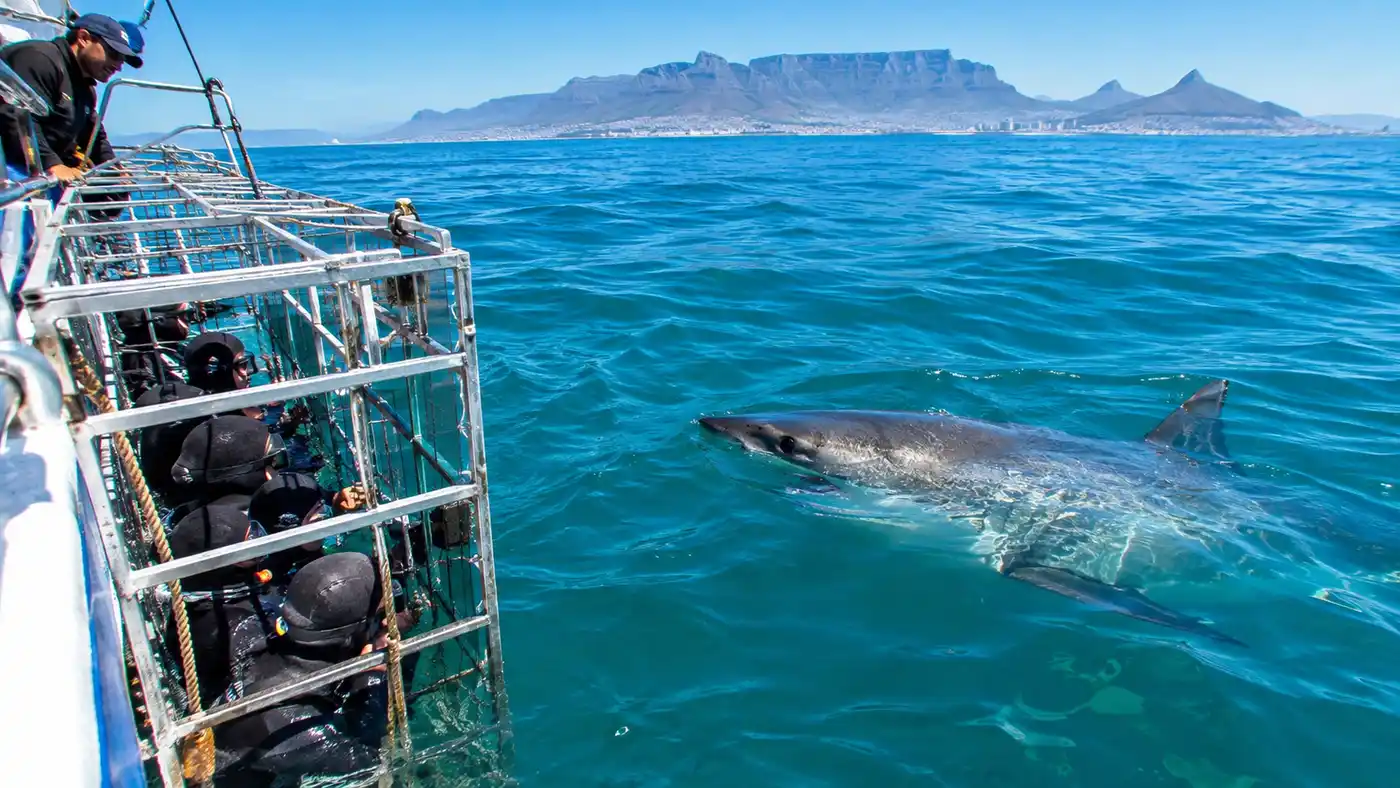
People imagine a flimsy birdcage dangling by a thread over the abyss. The reality is heavy, industrial, and bolted together with high-grade galvanized steel or thick marine aluminum. A standard cage weighs around 400 kilograms empty. It sits flush against the side of the dive boat, lashed directly to the gunwale with heavy-duty ropes and steel carabiners. You do not hang freely in the open ocean; you float partially submerged right against the vessel's hull.
The floatation comes from heavy buoy blocks lashed along the top rim. If the vessel were somehow to sink, the cage would simply float on the surface like a cork. The bars are spaced roughly 30 to 35 centimeters apart, which gives you clear sightlines while stopping an adult shark from squeezing its head inside. A solid handrail runs along the inside perimeter. You grip this bar to hold yourself down when a shark approaches, keeping your hands, elbows, and camera housing well inside the steel boundary.
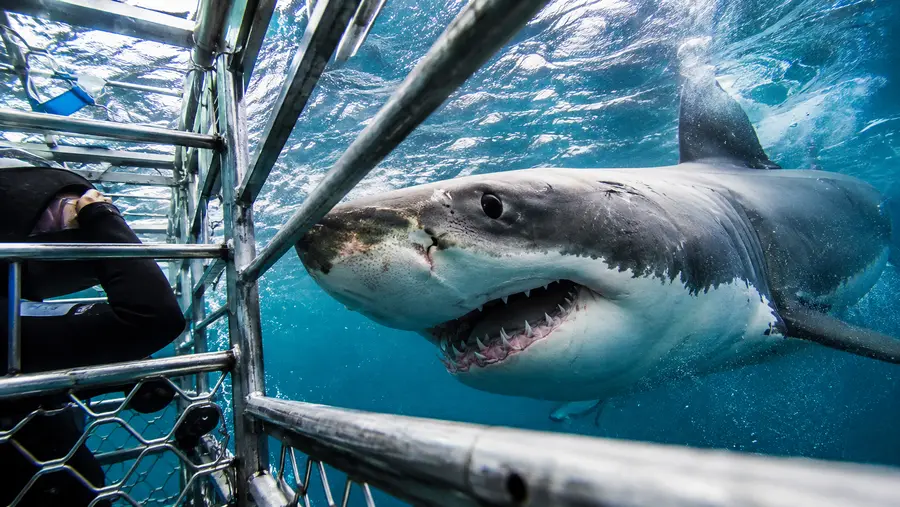
Are shark cages safe from direct impacts? Yes. Sharks are curious, but they are not battering rams looking to break metal. Sometimes a shark chasing bait will brush against the steel bars or bump them with its snout. The metal rattles, the floats squeak against the boat, and you get an adrenaline shock. The cage barely shifts. It is built to absorb that kinetic energy without warping.
Note: Never wrap your fingers around the outer bars to steady yourself against the swell. Keep your hands locked onto the interior grab-rails at all times so your fingers never poke into open water.
Regulations and Why a Shark Cage Diving Cape Town Accident Is Rare
South Africa was the first country in the world to formally protect great white sharks back in 1991. With that conservation status came strict commercial diving regulations overseen by the Department of Forestry, Fisheries and the Environment. Operators cannot just buy a skiff, throw meat in the water, and invite tourists along. Each licensed skipper must hold an offshore passenger permit, undergo regular marine safety audits, and operate within defined coastal zones.
If you look at the historical data spanning three decades, a catastrophic commercial shark cage diving cape town accident involving a paying guest simply has not happened. Over several hundred thousand tourist dives since commercial operations launched in the mid-1990s, no cage diving tourist has been killed by a shark in South Africa. The few viral videos circulating online show sharks snagging bait ropes and accidentally thrashing near cages, yet the barriers held.
Wild ocean attacks happen, but context matters. When you read about cape town shark attacks, those incidents almost exclusively involve spear-fishermen or surfers sitting in the impact zone along remote beach breaks. Those individuals are isolated, floating near seal colonies, and look like wounded prey on the surface. On a dive boat, the sharks are responding to scent trails and decoy lines, circling calmly around an enormous motorized hull they have zero interest in attacking.
- Crew training: skippers and dive masters must log hundreds of sea hours and complete commercial passenger endorsement testing.
- Gear inspections: cages and dive lines undergo mandatory annual structural checks to maintain operating permits.
- Chumming limits: operators are legally prohibited from feeding sharks; they use fish oil and mashed sardines strictly to draw scent trails.
- Decoy retrieval: bait handlers pull wooden decoys away before the shark reaches the cage to prevent accidental collisions.
Locations Compared: Gansbaai, False Bay, and Hermanus Shark Cage Diving
Most travelers book shark trips out of Cape Town assuming the boat leaves from Table Bay. In truth, you usually drive between 45 minutes and two and a half hours outside the city to reach the launch sites. Gansbaai is the undisputed capital of the industry, sitting roughly 160 kilometers southeast of Cape Town. A few operators also run out of Simon's Town in False Bay or Mossel Bay further up the Garden Route.
Weather dictates everything. Hermanus shark cage diving actually operates out of the nearby harbor at Kleinbaai, which is just down the road from Gansbaai. The boats head out toward Shark Alley, a narrow channel running between Dyer Island and Geyser Rock. Dyer Island hosts thousands of African penguins, while Geyser Rock holds a breeding colony of roughly 60,000 Cape fur seals. That natural pantry has drawn predators to these waters for thousands of years.
Pro tip: Take a motion sickness tablet the night before your trip, then take a second dose an hour before boarding at Kleinbaai. The rolling swell inside the bay makes even tough sailors green within twenty minutes.
False Bay used to be famous for breaching white sharks at Seal Island. In recent years, transient orca pods disrupted those resident populations, pushing operators to focus heavily on bronze whalers, broadnose sevengill sharks, and mako sharks. If you want to dive deeper into the logistical side of the trip, read through this Gansbaai shark cage diving guide before setting your alarm for a 4:30 AM pickup.
| Dive Location | Distance from City | Primary Sharks Seen | Water Conditions | Average Cage Capacity |
|---|---|---|---|---|
| Gansbaai (Kleinbaai) | 160 km (2.5 hours) | Bronze Whalers, Broadnose Sevengill | 12 to 16°C, moderate to heavy swell | 6 to 8 divers |
| False Bay (Simon's Town) | 40 km (50 minutes) | Sevengill, Bronze Whaler, occasional Blue | 13 to 17°C, sheltered bay chop | 4 to 6 divers |
| Mossel Bay | 390 km (4.5 hours) | Great White, Ragged-tooth, Bronze Whaler | 15 to 19°C, warmer, moderate swell | 4 to 6 divers |
Book your shark cage diving cape town experience:
The Real Hazards: Cold Water, Swell, and Deck Slips
If you ask an offshore skipper about the biggest dangers out on the water, they will not mention teeth. They will talk about wet decks, heavy gear, and cold shock. The South Atlantic is frigid. Water temperatures in winter hover around 13 degrees Celsius, and in summer an upwelling can drop the ocean to an icy 11 degrees. Most operators outfit you in a thick 7mm neoprene wetsuit, booties, and a hood.
When you jump into the cage, that icy water rushes down the neck of your suit. Your breath catches. If you panic, you might swallow saltwater or bump your knees hard against the submerged foot rails. A Portuguese tourist standing next to me on the boat pointed at a photo of a bronze whaler on the skipper's phone and said, "mostre uma imagem," asking to see an image of a shark hitting the cage. The crew smiled, because the shark bumping the cage is easy. Stepping onto a rolling swim platform while wearing twenty pounds of wet rubber is where people actually twist ankles.
Safety inside the cage is largely about physical discipline. You do not need scuba gear; operators use simple breath-hold diving or surface-supply hookah regulators. When the spotter on the boat deck yells "Down left!", you take a breath, slide down beneath the surface using the interior handrails, and watch the shark pass. You stay down for ten or fifteen seconds, kick back to the surface, clear your mask, and breathe.
- Keep limbs inboard: never place your feet or toes outside the lower bar gaps while sinking down.
- Mind your footing: boat decks are coated in fish oil, sea spray, and wet ropes; walk flat-footed and hold railings.
- Communicate clearly: if your mask floods or you feel claustrophobic, tap the dive master on the deck immediately.
- Dress in layers: bring a dry windproof coat for the run back to harbor, because wind chill hits hard once you strip off your suit.
City Safety Versus Ocean Safety: Is Cape Town Safe for Tourists
Travelers often combine marine excursions with broader road trips across the Western Cape. You might wonder: is cape town safe once you step off the boat and head back to your hotel? Just like the ocean, land-based safety comes down to understanding the environment. Urban neighborhoods like Camps Bay, Kloof Street, and the V&A Waterfront are heavily monitored and easy to explore during daylight hours.
The road down to the shark harbors takes you through rural farming valleys and dramatic mountain passes. Most dive outfits offer round-trip transfers directly from central city hotels. Using their door-to-door shuttle removes the stress of navigating early morning fog along mountain highways. If you choose to rent a car, stick to the main highways like the N2 and R43, keep your doors locked, and avoid stopping on highway shoulders.
South Africa has an intense reputation. Yet when you follow basic street smarts on land and listen closely to your skipper at sea, you find that the country's tourism infrastructure is remarkably professional. People here take hospitality and visitor safety seriously because marine ecotourism supports thousands of coastal families.
Frequently Asked Questions about is shark cage diving safe in south africa
Can a shark get inside the cage?
The cage bars are engineered with narrow spacing to prevent adult sharks from entering. A shark cannot bite through galvanized steel or force its shoulders between the bars. The only way an incident occurs is if someone sticks their limbs out into open water, which crew members explicitly instruct you not to do.
Do I need scuba certification to go cage diving?
No certification is needed. Most operations use breath-hold diving where you simply pull yourself below the water when a shark approaches, or they provide a basic surface-supplied hookah snorkel that requires no previous diving experience.
Which town offers the safest shark cage diving in south africa?
Gansbaai offers the most established safety infrastructure simply because it has operated commercial charters every single day for thirty years. The boats are purpose-built catamarans designed specifically for shallow coastal swells.
What happens if I get seasick during the trip?
Seasickness is very common. Crew members will guide you to the stern where you can get fresh air and look at the horizon. You are never forced into the cage, and viewing the sharks from the elevated upper boat deck is often just as thrilling as being in the water.
Quick Reference
- Zero tourist fatalities in 30+ years of commercial operations
- Water temperatures range between 11°C and 16°C year-round
- Heavy 7mm wetsuits and masks provided by operators
- No scuba certification or prior diving experience required
- 2 to 2.5 hour scenic drive from central Cape Town
Book your shark cage diving cape town experience:
The Bottom Line
Cage diving is an adrenaline sport, but it is not an uncontrolled gamble. The equipment is heavy, the skippers are tested, and the animals are far more cautious around boats than movies would have you believe. If you can handle an early morning wake-up call, two hours of cold spray, and the smell of pilchard chum, you will walk away with one of the most intense wildlife encounters on the planet. Book your trip with a licensed operator, swallow a seasickness pill before the harbor gates open, and step into the cage with confidence.
Read more about shark cage diving cape town.